
The following review is by our good friend, Goodtwin, who gained his online handle by kicking my butt in GoldenEye on Wii. He’s an adept Monster Hunter, user of target finders, and knows more about graphics technology than you do. Enjoy!
[by Goodtwin]
Graphics: 5/10
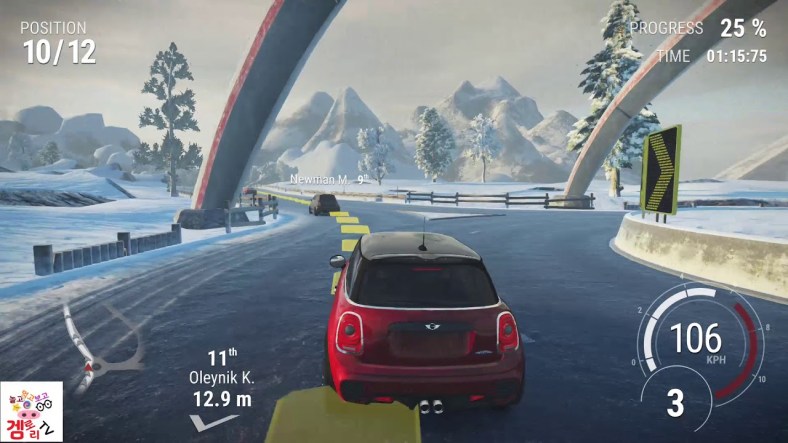
Gear.Club Unlimited 2 is a mixed bag when it comes to its visual prowess. Some assets, such as car models, look rather nice, but the environments themselves feel very dated and lifeless. The locales are quite static, with no signs of life in the world outside of the vehicles on screen (you won’t even see clouds moving across the sky). The lighting and shadow implementation also looks fairly rudimentary. Light sources seem limited to the sun in the (static) sky and vehicle head lights that only turn on when inside tunnels. If you’re looking for visual splendor here, it is very hard to find. It isn’t so much that the game looks bad, but it looks very much like a PlayStation 2 game with improved textures and rendering in HD. A near-complete absence of particle effects plays a big part in the boring look of this game. Outside of a limited amount of dirt coming off the tires in rally races, there are no particle effects to write home about. The frame rate is mostly a locked 30fps experience, however I have experienced some stutter that I believe is caused by frame pacing inconsistencies rather than actual drops in frame rate.
Presentation Values: 4/10
The menus are easy to navigate and have a clean, appealing aesthetic. Nothing here stands out and will really wow the player, but it also doesn’t hinder the experience. What does stand out is the jarring lack of a soundtrack with this game. I can’t remember the last racing title I played with absolutely no music playing while speeding around the tracks. Some players may prefer the lack of tunes, but I found it disappointing. Perhaps a lower price point would offset some of these short comings, but as a full-priced retail release? It falls well short of every competitor on store shelves.
Sound: 6/10
Sound effects in this game often seem inaccurate. It isn’t so much that they sound bad, just mismatched. For example, the small-displacement motor a Mini Cooper comes equipped with simply doesn’t sound this way in real life. Collisions also sound off, and there isn’t much variety to them – the difference between hitting another vehicle or guard rail at 120 mph compared to 30 mph isn’t conveyed in a convincing manner. The sound-effects package as a whole can be summed up as being…limited (to be kind).
Gameplay: 8/10
Controls lean heavily towards the simulation genre rather than the loose “brakes are optional” controls found in the average arcade-style racer. Physics bring a very weighted experience, and it takes some play time to acclimate. Last-second braking into a corner with the expectation of drifting around the turn at full speed isn’t going to happen, instead resulting in a crash into a guard rail, or spinning out (giving you a nice view of the competition cruising past). The computer AI is relatively fair, albeit a bit ruthless at times. When you do manage to drift around a corner, it is not unusual for the racer behind you to give a little love tap – causing a disruption in your vehicle’s handling, and can even spin you out altogether. Meanwhile, between races, there is a performance garage where the player can customize their vehicle. Changes range from cosmetic alterations to performance enhancements, such as improved engines and tires. The upgrade system is very linear, meaning the structure is such that every upgrade is intended to be an improvement. Don’t go in expecting to be able to immediately fine tune your car’s suspension settings for a desired amount of oversteer.
Overall Value: 6/10
Where Gear.Club Unlimited 2 falls short in graphics, sound, and presentation values, it mostly makes up for in the sheer volume of content. There are hundreds of races with a fair amount of variety. There is enough tinkering to be done in the garage to sufficiently satisfy most fans of the genre. Still, it’s hard to get past the $60 asking price. The developer may have been wise to opt for a more budget friendly $30-40 price tag to avoid direct comparisons with what is being offered at full price elsewhere.
 Game Witness